

In the last two years, there’s been a lot of headlines about Gen Z having less sex.
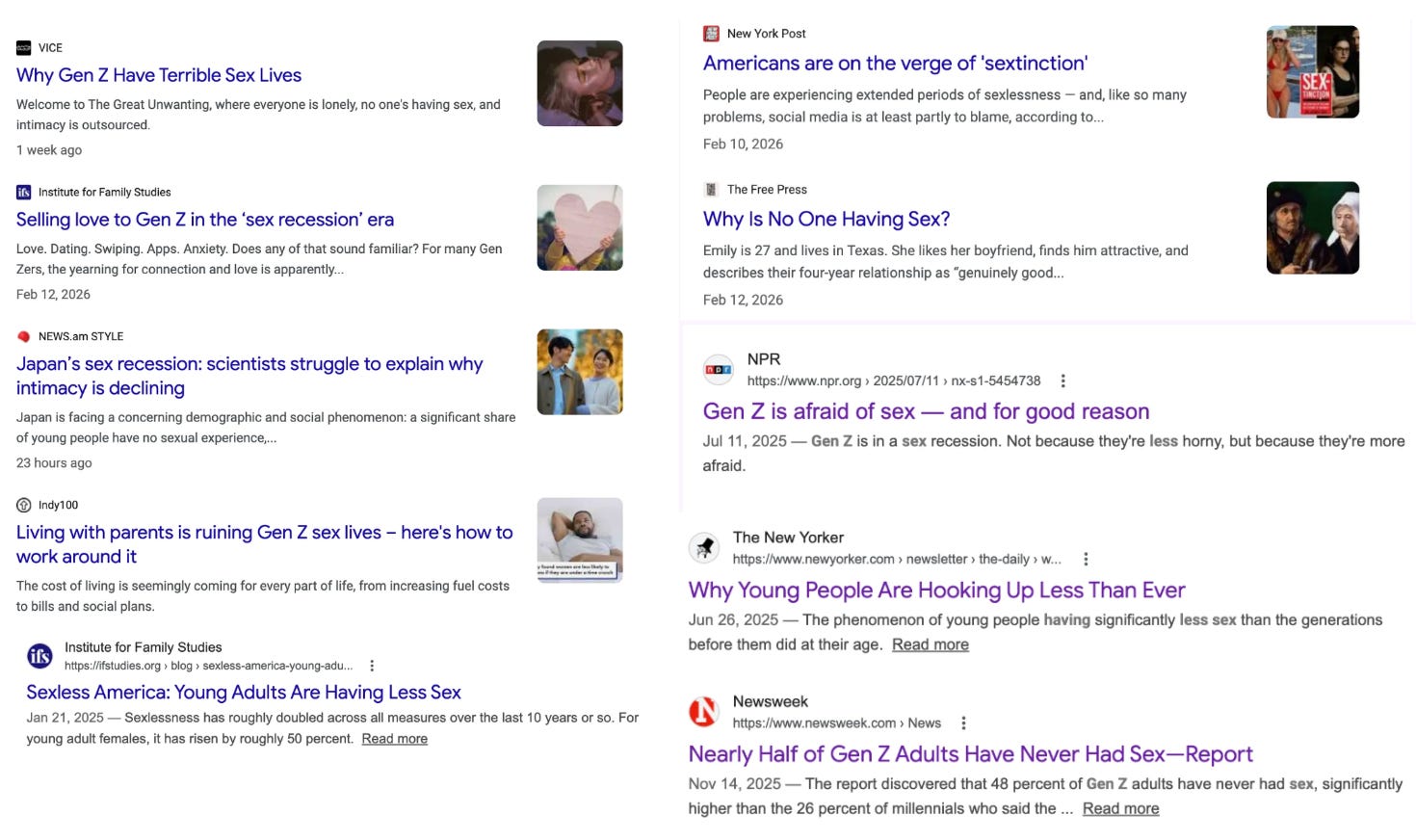
America’s sex-obsession isn’t particularly new, of course. Culturally, America has always been hyper-invested in policing the sex lives of young people. Recall the 1950s ‘satanic panic’ over Rock n’ Roll, or the plots of 80’s films like Footloose and Dirty Dancing. It has also happened irl to celebrities like Britney Spears, Miley Cyrus (+ the Jonas Brothers), and on reality TV like The Bachelorette (s/o Kaitlyn Bristowe). It’s also the central plot hinge in newer TV shows like Fox’s Temptation Island and Netflix’s Too Hot to Handle.
In 2026, these narratives aren’t new, but they are connected to the political discourse about Gen Z A LOT more.
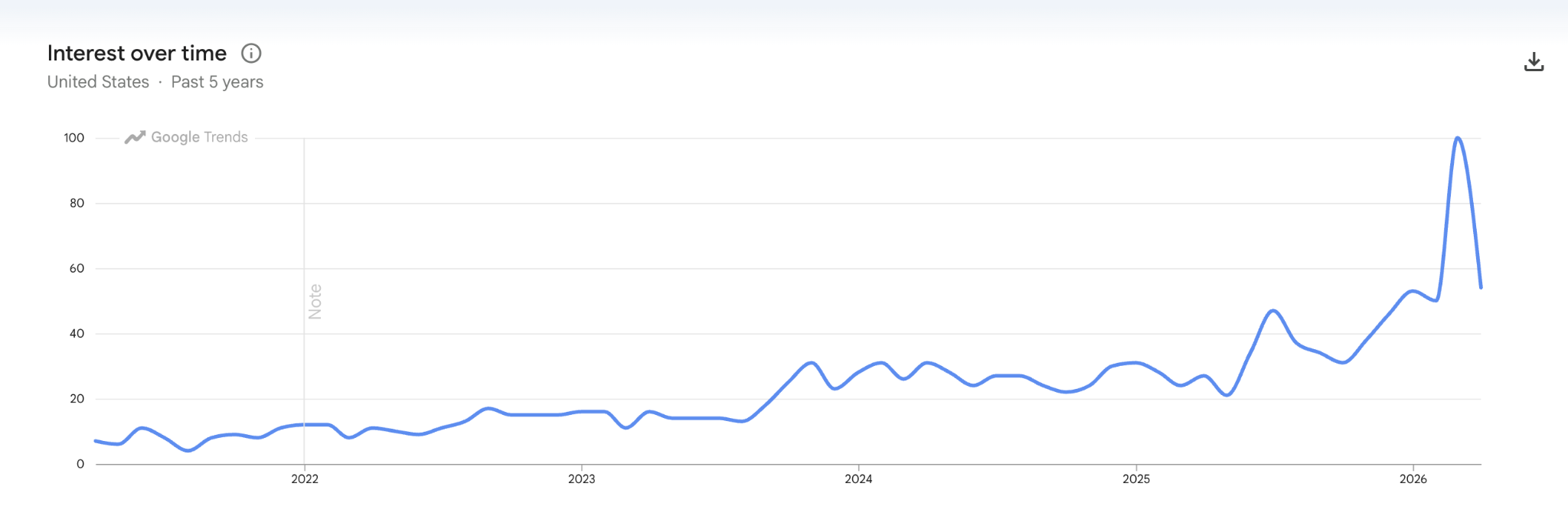
From discussions of declining birth rates, the ‘traditional family’, or how the gender divide between political parties makes dating ‘more difficult’ – Gen Z’s sex life is getting politicized, with little time spent addressing the systems of power that benefit when it does.
Let’s get into it.

The (Moral) Panic Button
The media’s resounding narrative around young people’s sex lives and the declining birth rate frames it as a moral problem. In an article published last year, Newsweek attributed the uptick in young singles to young people ‘struggling to forge relationships’ due to social media ‘breaking their social lives’.
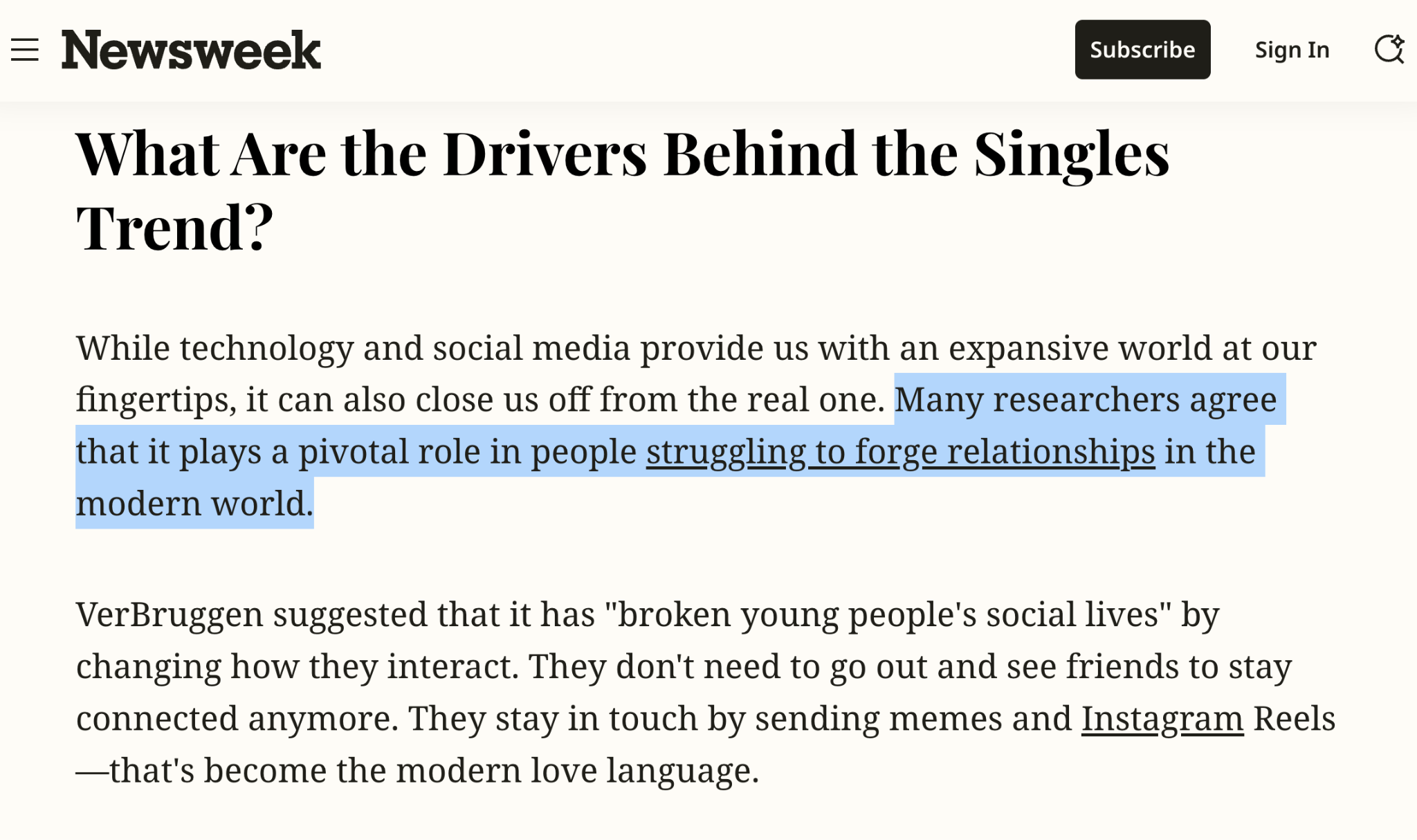

The article argues that young people have ‘broken social lives,’ and therefore they are having less sex. Ultimately, the article concludes that the most harmful part of this declining birthrate is 1) it can lead to “significant strains” on the workforce and 2) increased social isolation as the family shrinks.
This article is DRIPPING in moral panic. Primarily, the piece (and lots of others) sees Gen Z’s isolation as a self-created problem, rather than a systemic one. In this worldview, Gen Z is having fewer children because they are…weird and immature and want to play Candy Crush (???) instead of engaging in the reality that this might have to do with the conditions we all exist in. Not only is this explanation condescending, it’s also a boring perspective on young people’s lives that lacks curiosity in favor of myths.
This moral panic also extends to Gen Z’s responsibility of having babies to bolster the economy. In an NPR article from last year titled “A looming ‘demographic cliff’: Fewer college students and ultimately fewer graduates,” the United State’s declining birthrate is framed as a problem for colleges and universities. Fewer babies means fewer applicants, means less tuition, means schools shut down, AND means fewer people to fill jobs that support our economy, leading to ‘economic decline.’ The solution proposed? HAVE MORE BABIES.

Hmmmm.. Rather than building policy to support small schools and reconsidering our higher education system, universities and institutions are calling on people to have more babies. This is..not it.
The Newsweek piece (+ the NPR article) also encapsulate how a declining birth rate is seen as a sign of Gen-Z’s ‘loneliness’ without doing any work to reimagine how Gen Z is actually experiencing their lives (and what society could be!). Narratives like this shift the onus onto the individual rather than the system AND blames young people for not creating more worker bees and destroying the ‘family’. This view refuses to engage with the real climate anxiety, climate consciousness, and economic struggles young people are experiencing. When young people are focusing on simply trying to survive, the thought of having children falls to the wayside. Declining to have children is not just about people being lonely, it’s about young people not being supported by policy in real, tangible ways AND about young people reimagining where they derive meaning.
Earlier this year, Charli XCX did an interview on the Smartless podcast with Jason Bateman, Sean Hayes, & Will Arnett that captures this well. When Charli said she didn’t want kids, Bateman replied, “Well maybe when you find the right guy!” to which Charli was like…”well im married, so…?”
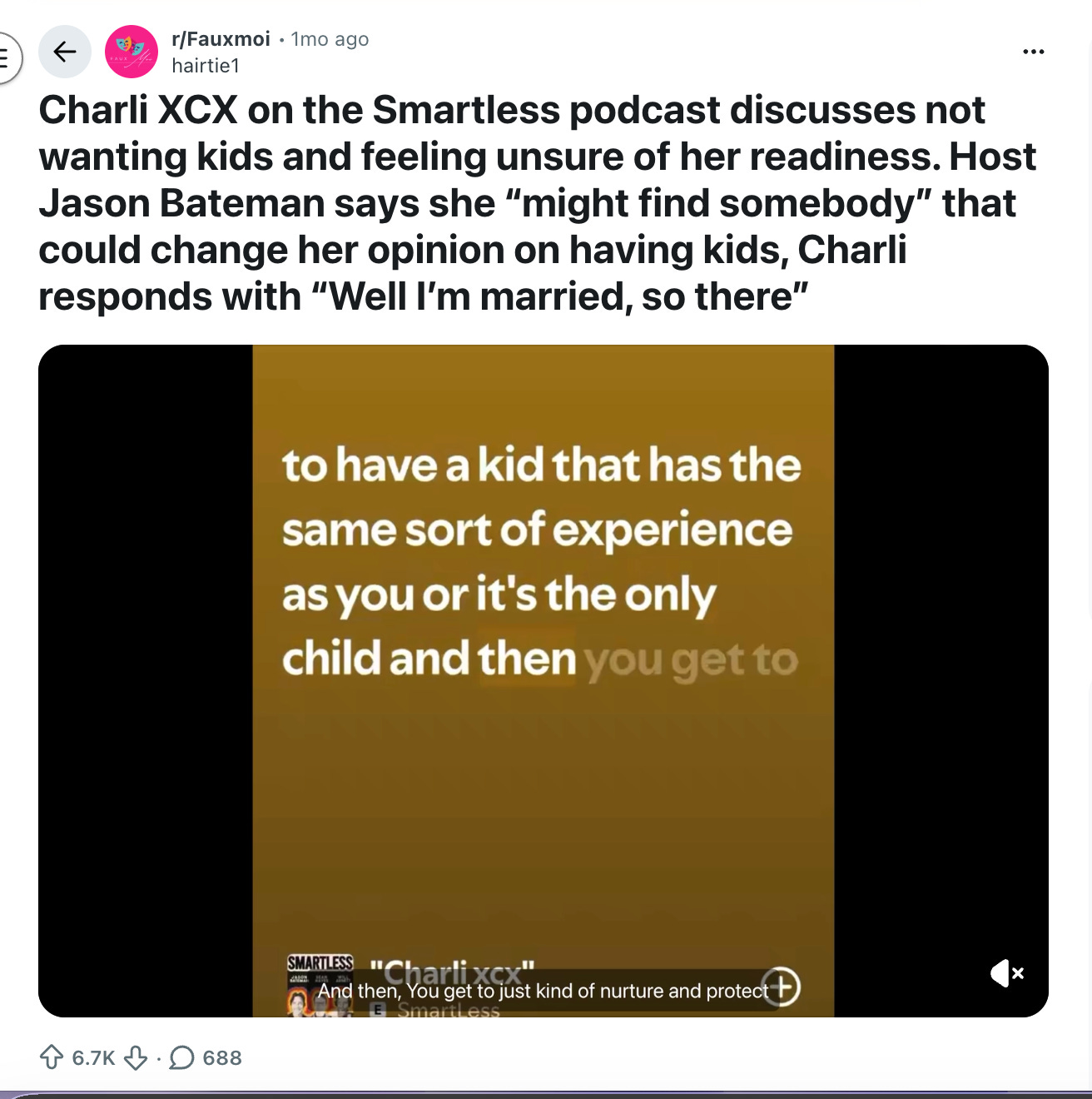
First of all, OOF. Second, this is a great example of how the idea of having children has shifted for young(er) people. It’s perceived as indicators of success, happiness, and heterosexual ‘benchmarks’ from Boomer counterparts – but young people can find meaning in different places, and at different times in their lives.
In a Pew Research poll from 2024, when asked why they are unlikely to have children, the top answer for adults younger than 50 is that they just don’t want to. Over half of these adults (57%) say this is a major reason, much higher than the share of adults 50 and older who said the same (31%).
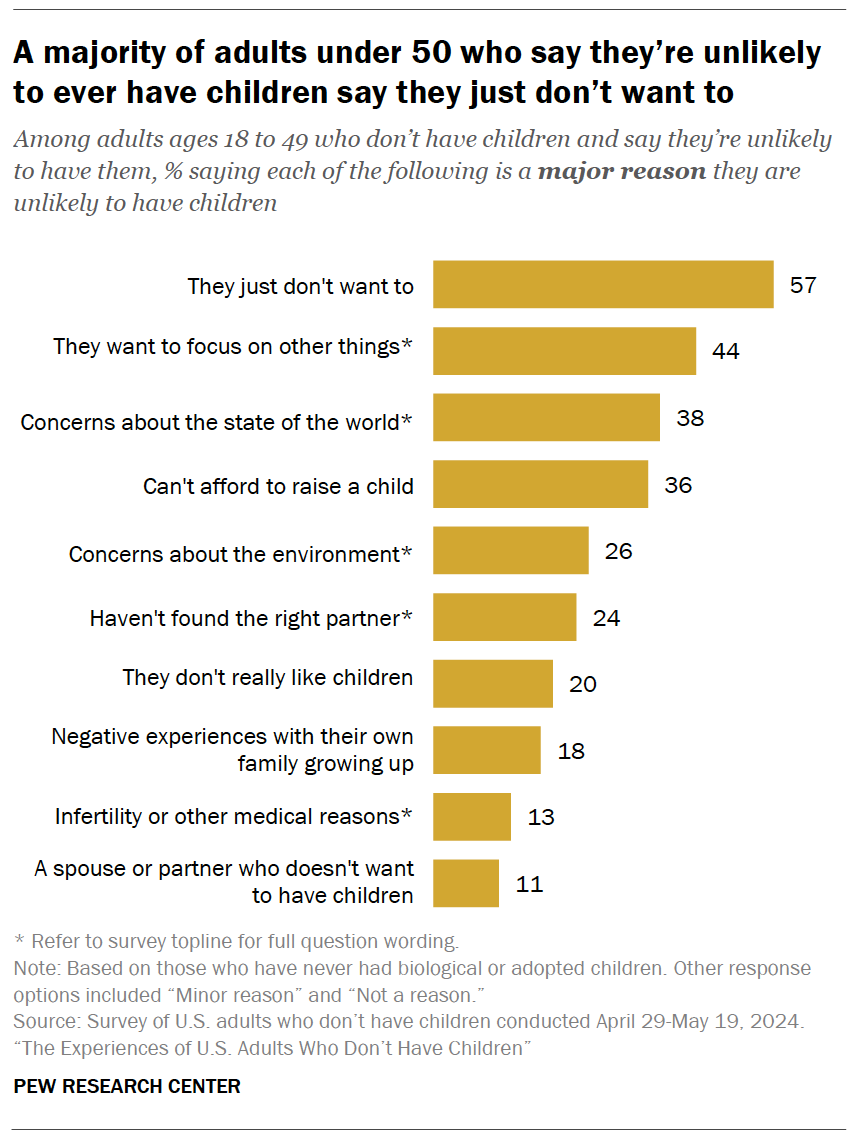
As Pew breaks down:
”By differences of 12 to 25 percentage points, those in the younger group are more likely than those ages 50 and older to say each of the following is a major reason they are unlikely to have children:
They want to focus on other things (44% vs. 21% in the older group)
Concerns about the state of the world (38% vs. 13%)
They can’t afford to have a child (36% vs. 12%)
They don’t really like children (20% vs. 8%)
And adults under 50 are about four times as likely as those ages 50 and older to say concerns about the environment, including climate change, are a major reason (26% vs. 6%).”
Additionally, when zooming in and breaking down the under 50 age group further, 51% of young people ages 18-39 said they are unlikely to have children because “They want to focus on other things,” as compared to just 27% of 40-49 year olds.
Instead of moralizing a declining birthrate and labeling it as a problem, we need to view it as a neutral thing in itself, but interrogate the harmful systems and policies that may be at the root. This includes rethinking the way we define ‘success,’ as well as the policies we prioritize in our communities – universal healthcare, childcare support, affordable housing, and embracing immigration rather than policing it – can create better conditions for us all.
Instead of examining young people’s loneliness – which is very real – as a symptom of America’s extreme individualist and capitalist culture – it is framed as a problem in the context of individual agency, sex, children, money, and the nuclear family. All markers that feed systems of power like capitalism, white supremacy, traditional conservatism, and Christian nationalism, and that rely on isolation to build extremism.
What this Means
Ultimately, the gross-ification of Gen Z’s sex life is part of a much larger attempt to define this generation as traditionally conservative. From ‘Gen-Z doesn’t drink’, to “Gen Z is leading a religious revival”, and “Gen Z loves the gym” all of these narratives build explanations for conservative policy changes.
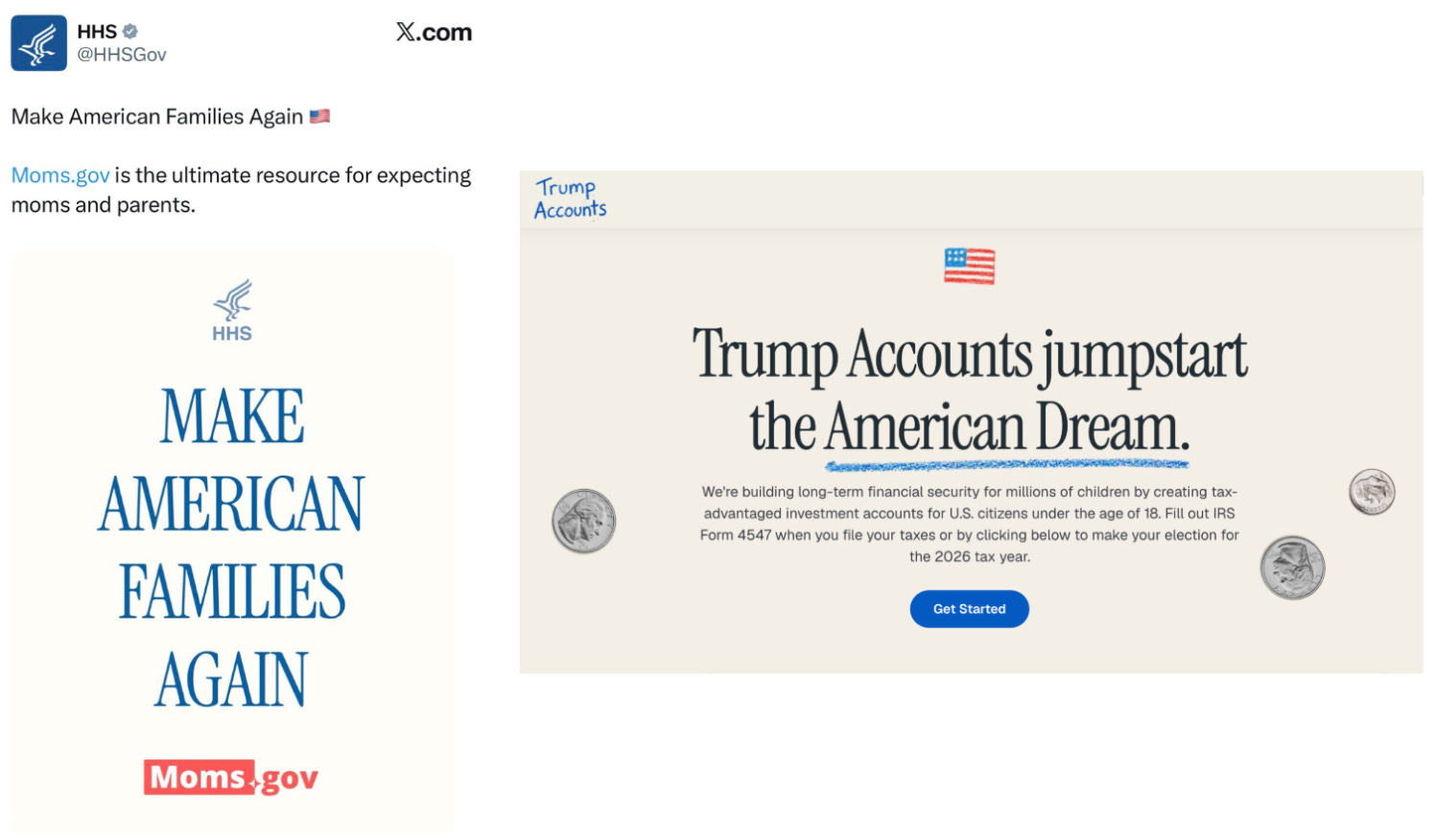
Whether it’s Trump’s baby accounts, the Trump Admin launching moms.gov and saying “One in three Americans are under-babied,” or RFK Jrs. MAHA movement, conservatives are working on an airtight case to justify decimating life-saving healthcare, limiting SNAP funds, and rolling back life-saving medications as a ‘public good’ that is ‘widely popular’ among this generation, instead of its more true, sinister goals of building a Christian nationalist, white supremacist, ableist, anti social safety net state. When the birth rate is hyper-sexualized, moralized, and gross-ified we avoid conversations that can actually address policy challenges and could help us to better understand young people.
So why don’t we cool it on the creepy fixation and dig deeper. Where are you going for meaning and community right now? Let us know in the comments!
On Our Minds and On Our Feeds
The Guardian: The fight against AI datacenters isn’t just about tech – it’s about democracy
AP: Cyberattack hits Canvas system used by thousands of schools as finals loom
One thing I also hate about the "attempts to define this generation as traditionally conservative" is that it is also completely possible to want "traditional" things (marriage, family, etc.) and also want progressive policy! They aren't mutually exclusive and the right loves to pretend that they are.